On election night, as the country watched the margins shrink between Scott Colom and incumbent U.S. Sen. Cindy Hyde-Smith, Muarib Abdul-Tawwab and his classmates sat on the edge of their seats.
In the weeks leading up to that day, excitement had been growing across Tougaloo College, a small, private, historically Black college of about 2,300 students in Jackson, Mississippi. Abdul-Tawwab had registered to vote over the summer, right after his birthday. In October, the 18-year-old and student leaders helped register at least 70 students to vote using their on-campus addresses.
Abdul-Tawwab said he and his peers were amazed: Colom really had a chance of winning. “We’re like, oh shoot, we are actually making a difference,” he recalled.
Then on Election Day, HBCU students from Tougaloo and Jackson State University found that hundreds of provisional, or affidavit, ballots weren’t counted due to errors ranging from incorrect counties on voter registrations to rejected ballots. Some students used student IDs, which is legal, according to the Southern Coalition for Social Justice, but those were still rejected.
Students were upset and questioned the process. Despite Colom’s victory, which makes him the state’s first Black senator since Reconstruction, Black students are grappling with thousands of tossed provisional ballots. They also told Capital B that their campus being split between two counties complicated the process. The dorms are in Madison County, but other parts of the campus are in Hinds County.
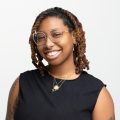
Many of the students didn’t even know the campus was split over two counties, said Aznii Welchlin, Tougaloo’s president of the student government association.
Welchlin, who is from West Jackson, said she never knew about the split. Although the 21-year-old graduating senior said she was shocked by the discovery, she wasn’t shocked that a small detail led to tossing out hundreds of Black students’ votes.
She said she’s seen how politicians have used tricks to stop Black and marginalized groups from voting. She pointed to the U.S. Supreme Court’s decision this year to gut parts of the Voting Rights Act, which opened the door for Republicans to redraw maps ahead of the midterms.
Still, when she spoke to her mentors who had attended Tougaloo, a college with a strong history in activism during the Civil Rights Movement, they had never heard of the split either.
Tossed ballots and confusion
In Mississippi, there is no online voter registration. Instead, student leaders attended training and leaned on local organizations like the state’s NAACP chapter to help register students on campus.
Abdul-Tawwab, Welchlin, and others persuaded their out-of-state classmates to register using their campus addresses. There was too much at stake, Abdul-Tawwab said. Across the state, anywhere Black people live, schools are underfunded, and there are too many food deserts, Abdul-Tawwab said.
His pitch was simple: “If you don’t think your vote matters, it does matter. But I say your vote matters more in Mississippi than it does where you’re from. … Where you’re from probably has a better, healthier voting practice than Mississippi does.”
“It’s all these issues, and most, if not all of them, can be traced back to having the wrong people in office,” Abdul-Tawwab said. “I was letting them know, like, if you don’t think your vote matters, it does matter.”
Tougaloo students weren’t alone in having their provisional ballots rejected.
In Hinds County alone, 2,426 affidavit ballots were received, yet officials rejected more than half of them, a county Resolution Board member told Mississippi Public Broadcasting Online. Lydia Grizzell, policy and advocacy manager of ACLU of Mississippi, said voter ID laws and inoperable machines fueled the more than a week delay with ballot counting.
“It is appalling the number of issues that we’ve seen, and we had on Election Day, and now we’re seeing the extension of that post-Election Day in a way that is not great,” she told Capital B.
There wasn’t a uniform way of counting ballots, she said, leaving it up to the local election boards. In some counties, counting votes happened behind closed doors, leaving questions for some.
Officials said many of the rejected ballots were due to error.
“Students who want to register have to write everything by hand, so when we think about that, we think about how things are spelled correctly,” Welchlin said.
Why the fight isn’t over
Mississippians will cast their next votes in runoff elections for Mississippi State House District 70 and 77 on Dec. 1. In Hinds County, there’s a special general runoff for Mississippi 7th Circuit Court district attorney on Dec. 1.
In the meantime, Welchlin said students have learned their lesson and will make sure their registration has correct information.
She’s also working with the Mississippi Access Project, a student-led coalition focused on building access, advocacy and collective power in Mississippi. Jakari Holland, a Jackson State student activist, founded the organization. The group is pushing for the state to modernize its election process by allowing online voting and same-day registration.
She added that she hopes Colom’s win gives students hope instead of discouraging them from casting future ballots. On Nov. 11, Colom delivered his victory speech at the college. Welchlin said it warmed her heart that he chose Tougaloo.
”[For] many students, this was their first time voting and [they] were very discouraged,” Welchlin said. “They were really excited that they got to vote or tried to vote, and because of that, we’re going to get them re-registered.”